Works for Mulka Yata / Knowledge of Place
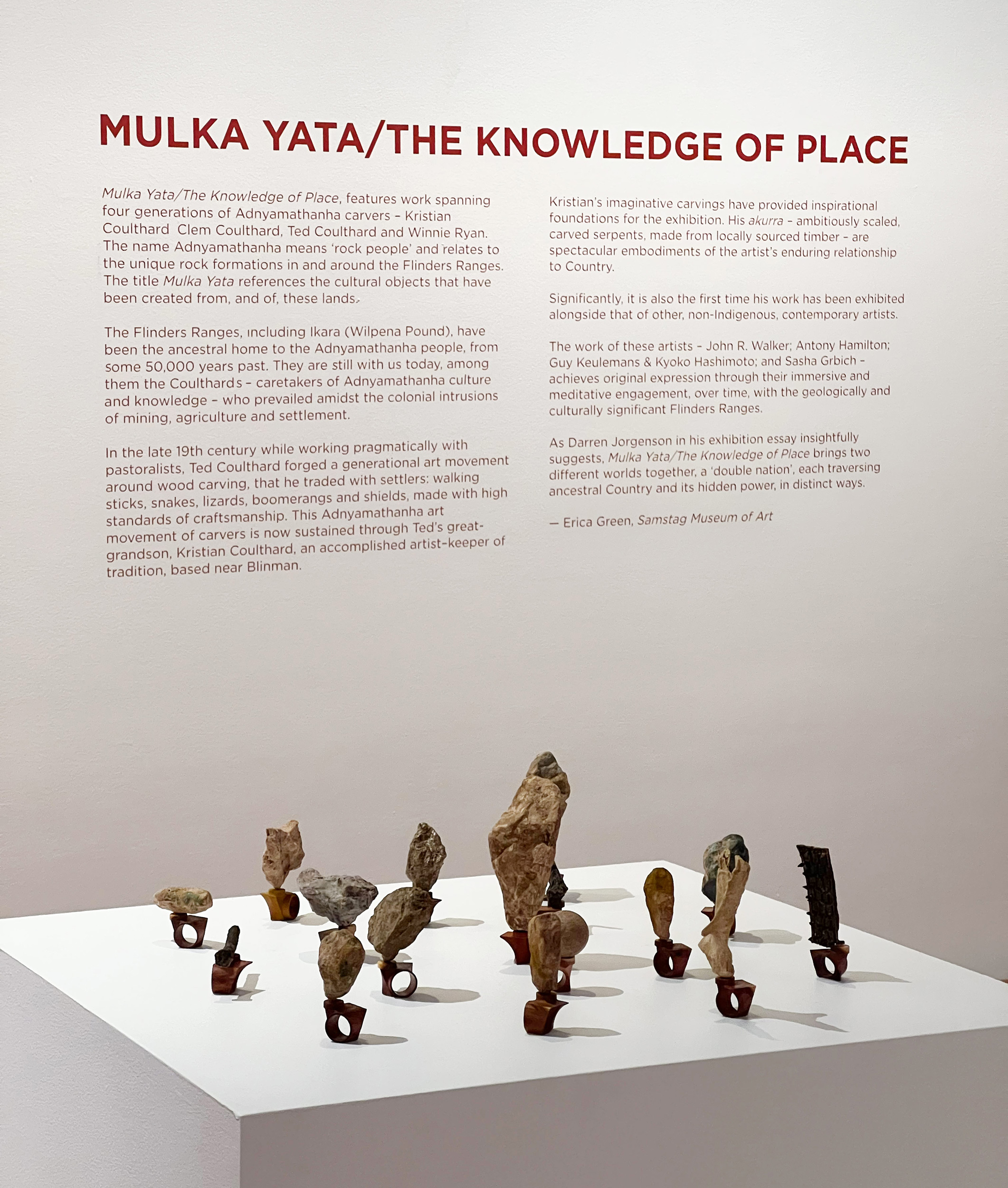
In June to September 2024, Kyoko Hashimoto and I exhibited new works in Mulka Yata / Knowledge of Place at Samstag Museum of Art, Adelaide. Mulka Yata is an Adnyamathanha word, and this project began with a visit to Adnyamathanha country of the Flinders Ranges, during which we met and learnt from Kristian Coulthard of Wadna, a traditional owner and master wood carver. Together we travelled around country, foraging rocks and discussing Adnyamathanha culture and craft techniques. Kristian gave us samples of local, native hardwoods, and taught us use of yakka tree resin as a material for timber repair.
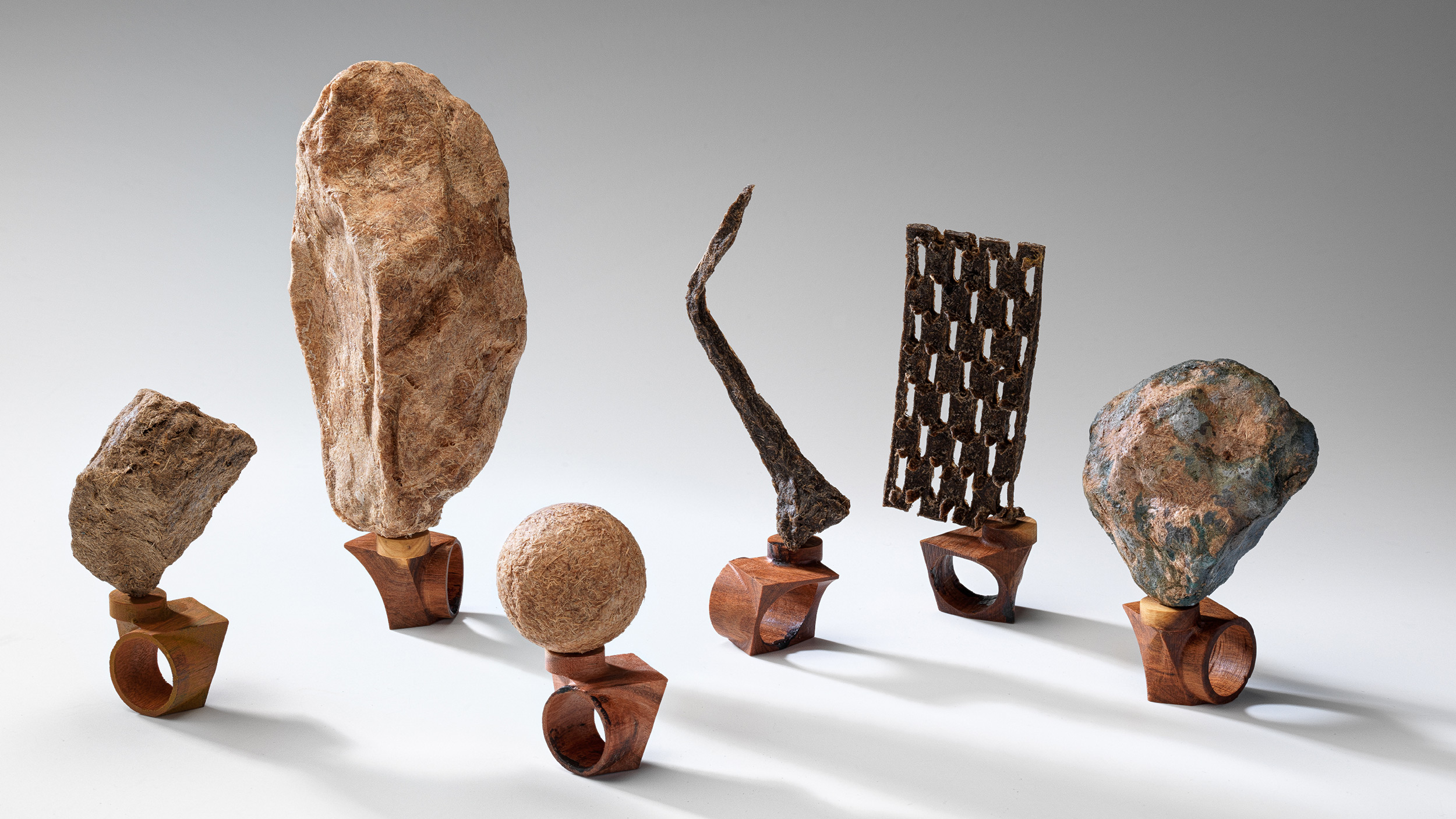
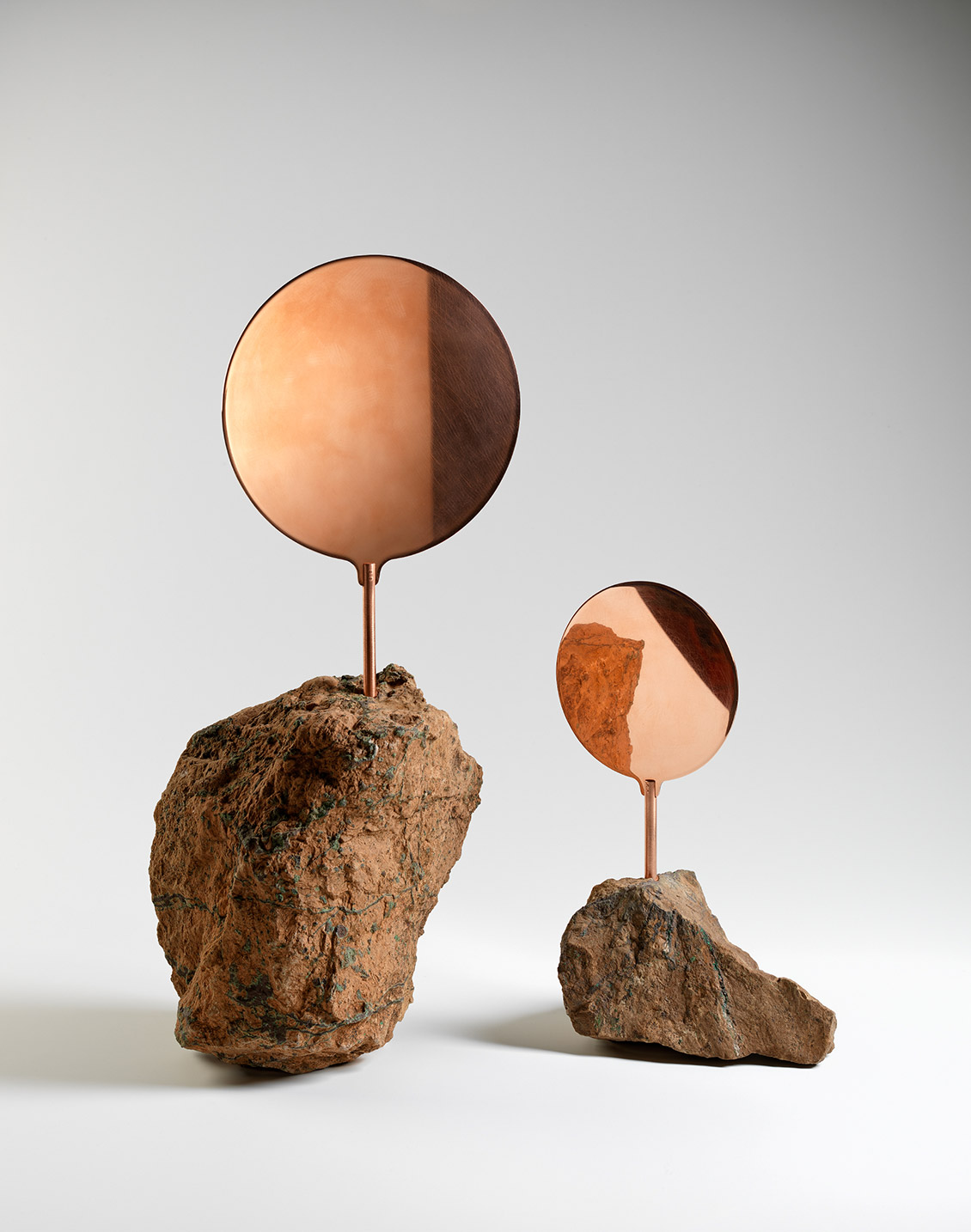
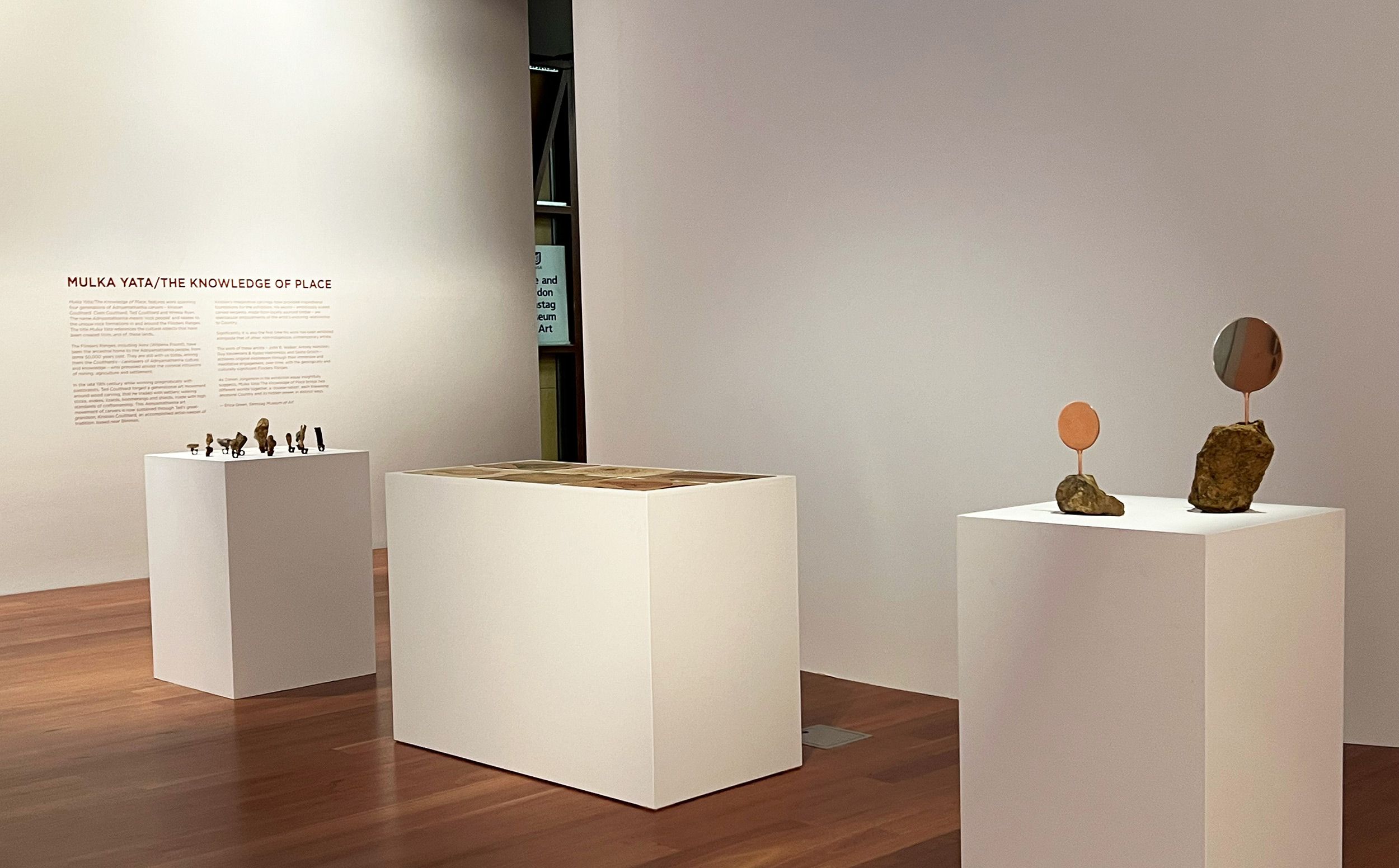
We were initially commissioned by Samstag to produce a new set of bioregional rings, a series of works that we exhibited previously at the National Gallery of Victoria, South Australia Museum and Art Gallery of South Australia. We pushed ourselves to create more intensively with local materials, adapting our ring bases into native timbers, and developing the same timbers into paper, and then paper mache, to recreate rocks and other objects we foraged. Local ochres were used to color the paper mache rocks, and create pigments for silkscreen prints on handmade paper. We extended our work to address the heritage Blinman Copper mine, producing a set of copper mirrors that draw from the history of copper and the mine as a site of colonial territorialisation. Verdergis, a pigment harvested from copper and vinegar reactions, was also used as a pigment.
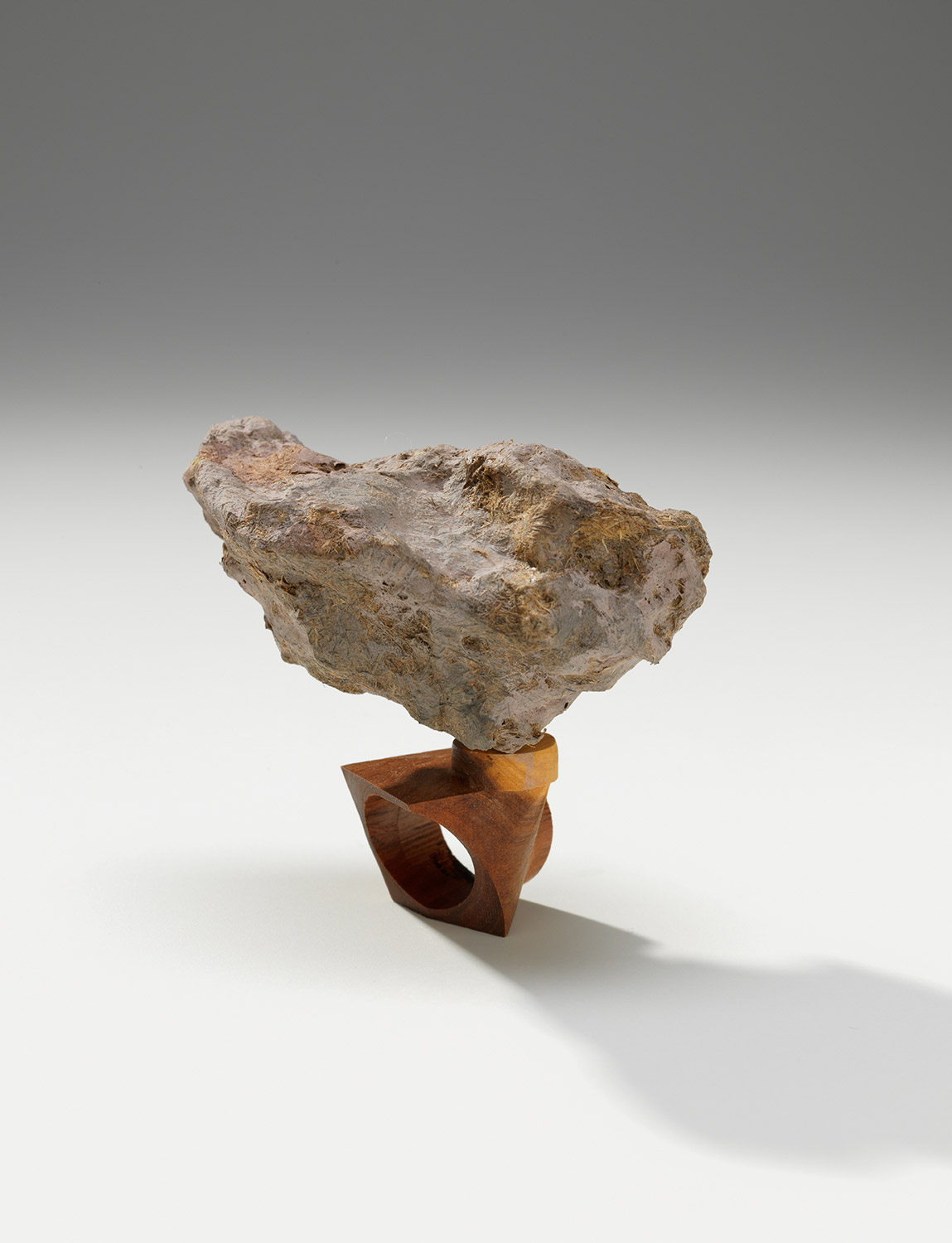
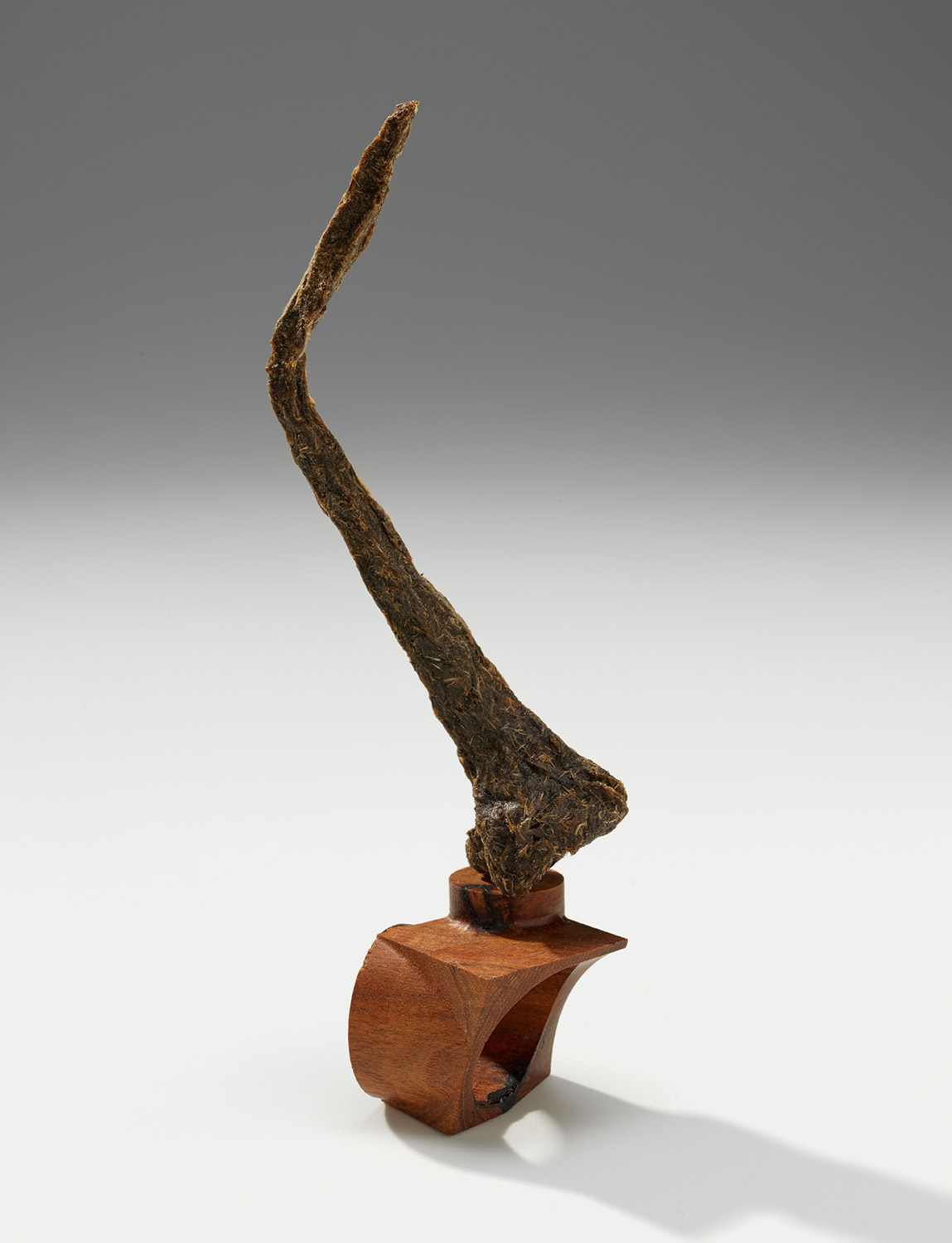
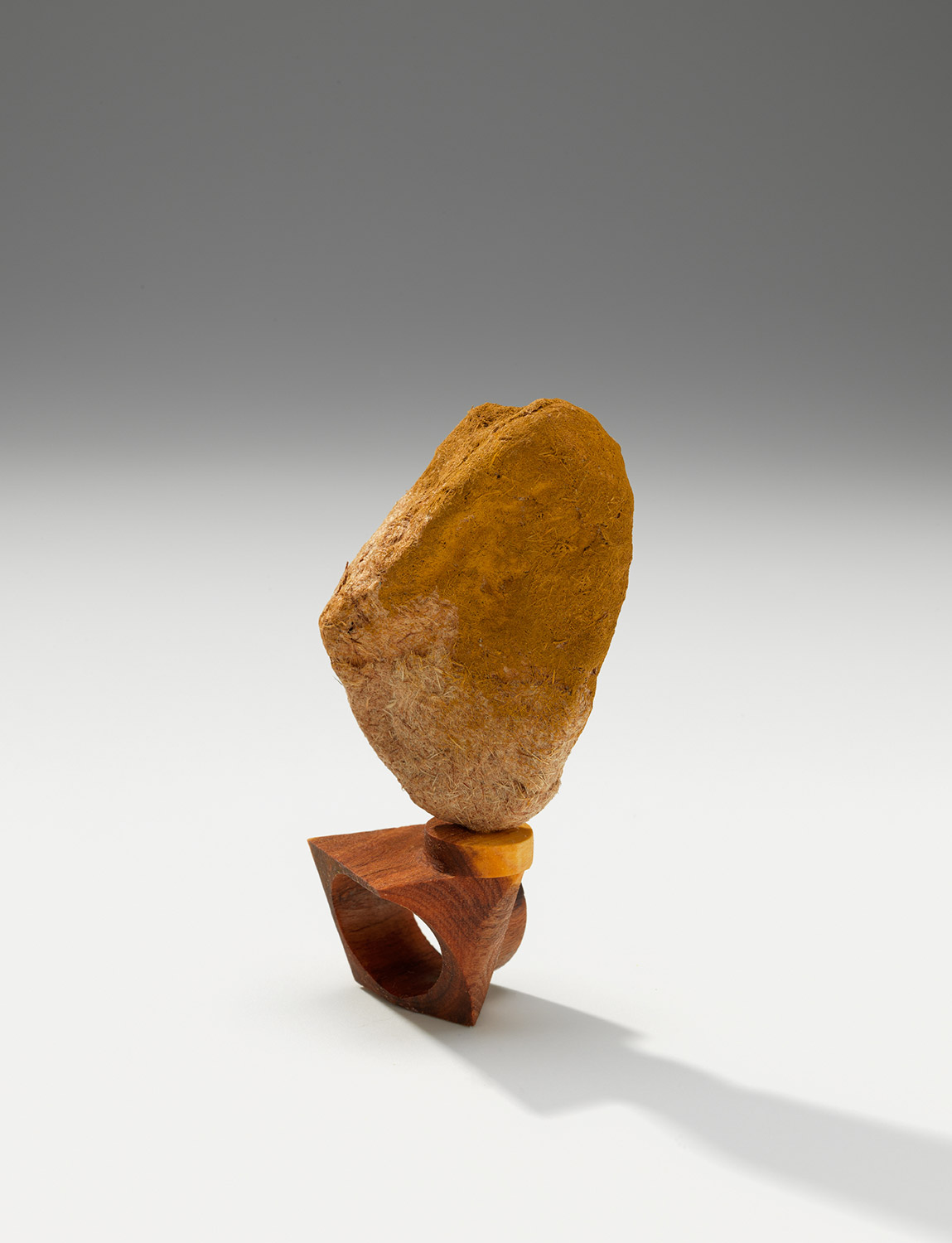
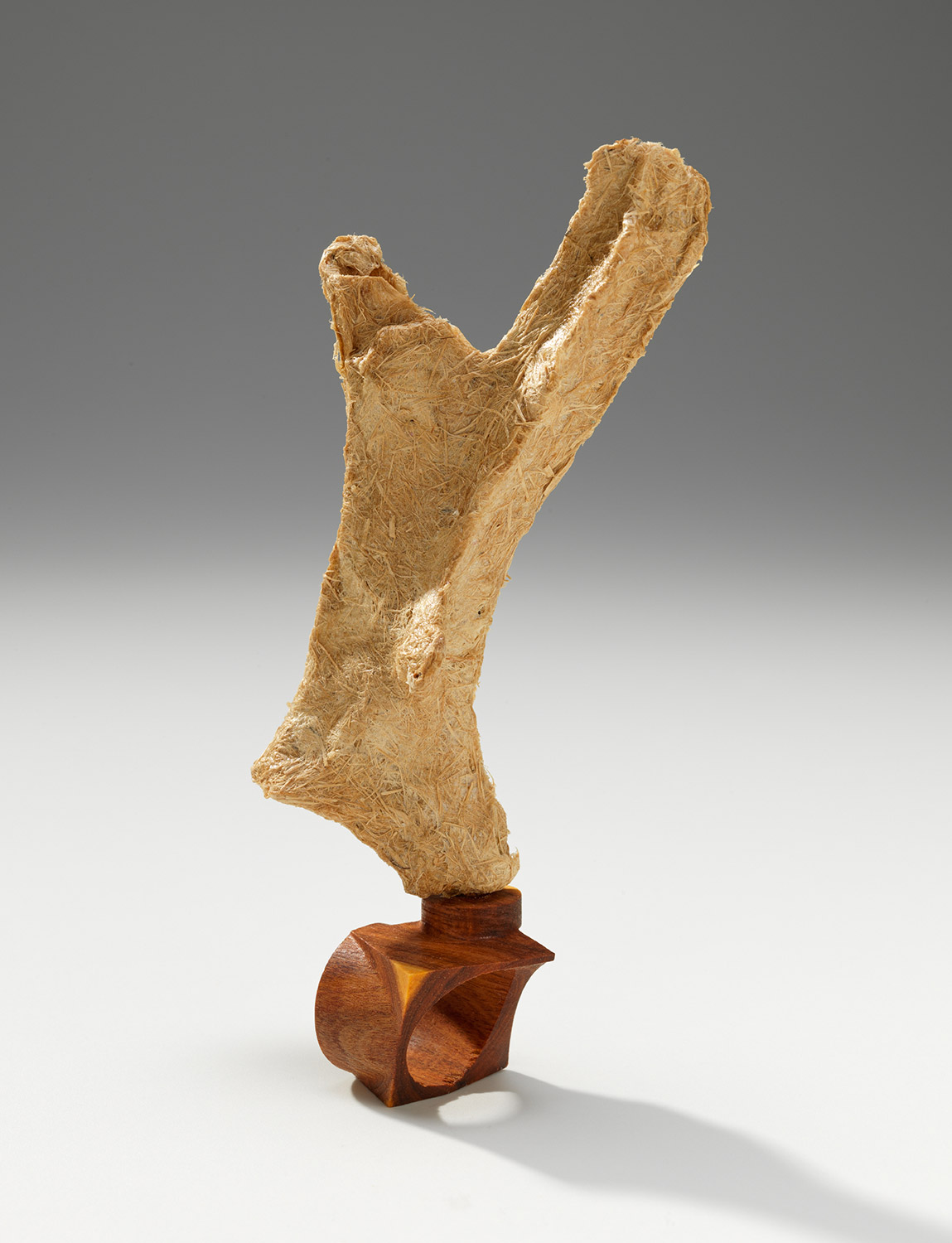
While we intended to use the rocks themselves on the rings, our study of the history of mineral extractions in Australia, often done in conflict with environmental and cultural care, led us recreating these rocks from paper, and so return the actual rocks to country untouched. These were not significant rocks. The Adnyamathanha identify and care for significant rocks (and the word Adnyamathanha literally means ‘rock people’), but such rocks are typically large and fixed in place, used by the Adnyamathanha as way-finding markers with significance to dreaming and law. The rocks we foraged are small and loose, and generally part of the bioregional material flows of small material, via rivers, erosion and wind. Nonetheless, the design decision felt both symbolic and meaningful in the context of regenerative design principles. All rocks are non-regenerative in timeframes of human civilisation, whereas wood and timber are functionally regenerative in a human lifespans. As I have written before, industry would do well to improve its material relations through better uses of wood. Forestry in Australia is over-reliant on introduced monocrop species like Pinus radiata. Our main use of native species, blue gum, is almost entirely woodchipped for export. Our use of native timbers of Acacia and Brachychiton to make not just paper, but paper mache and also rings, delicately shaped through digital milling with machine imperfections repaired with yakka resin, using the technique Kristian taught us, advocates for sustainable use of a wider range of timbers, timber products and forestry approaches.
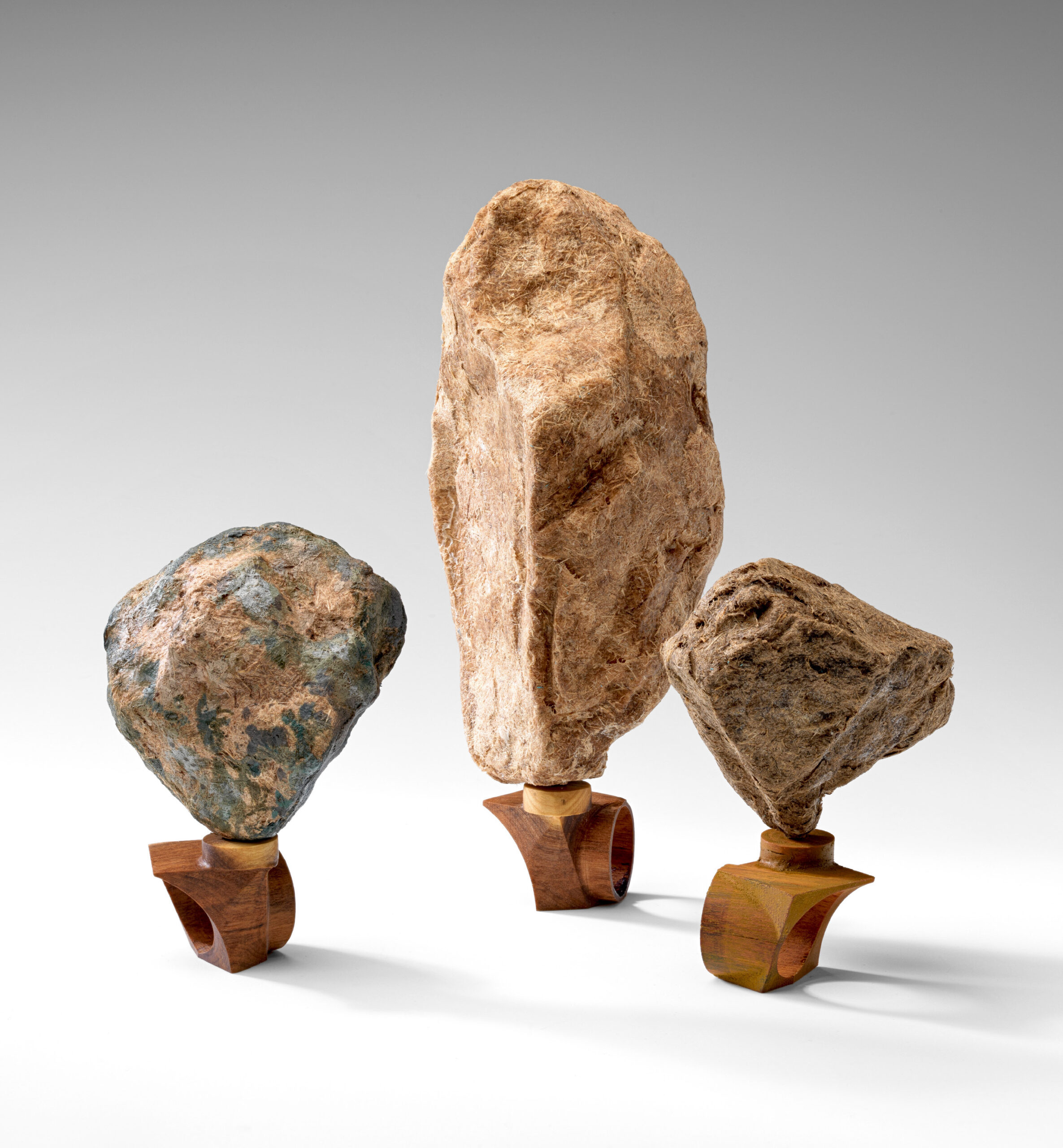
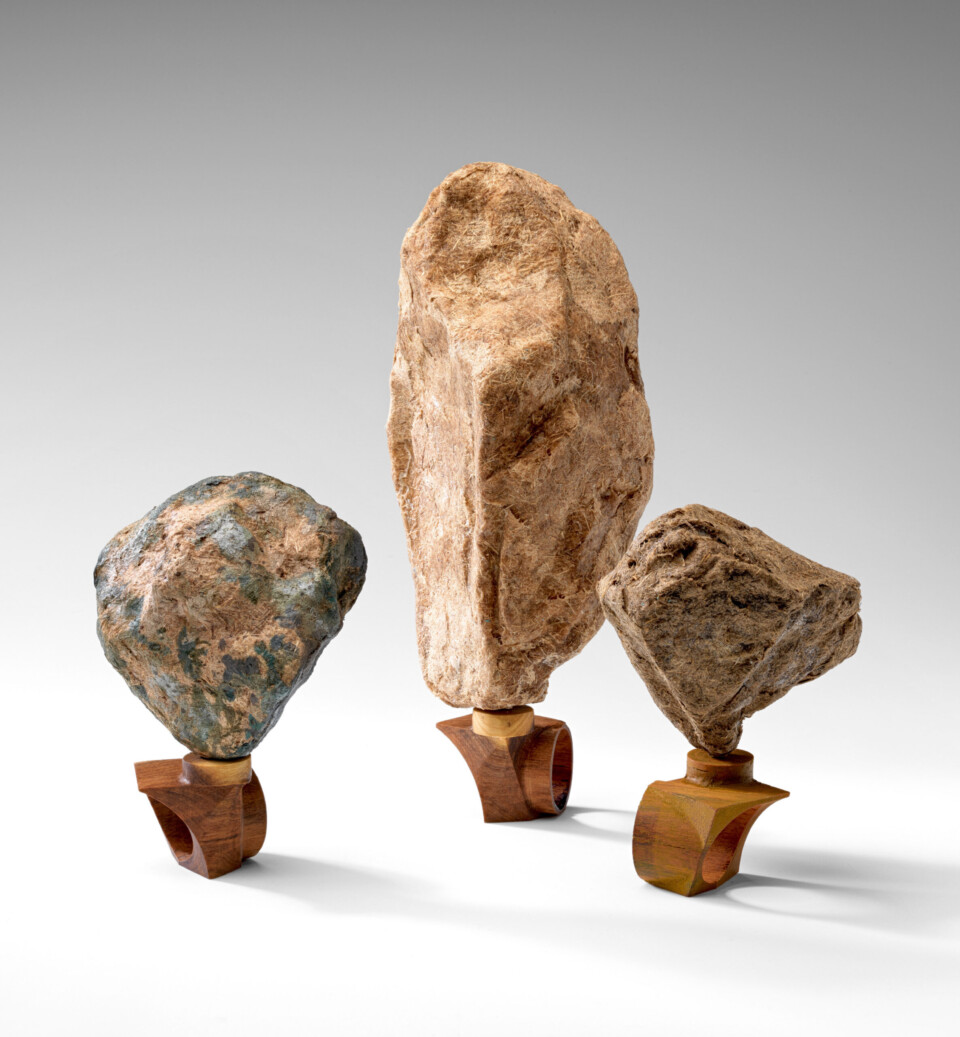
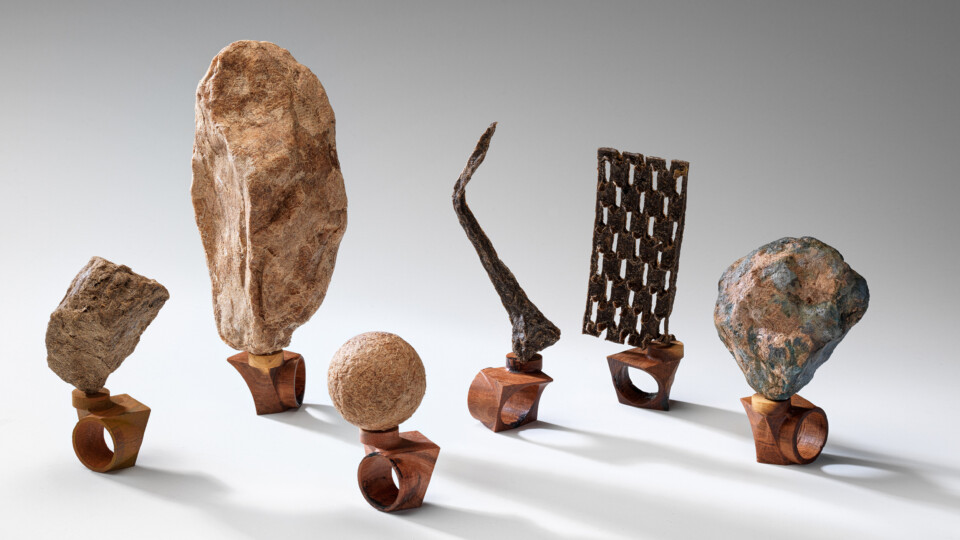
We would like to thank Kristian Coulthard for his guidance and sharing of Adnyamathanha knowledges, Erica Green and her team at Samstag for commission and curation, and Bujikham Batmunkh for paper making research assistance. Following is description of the works exhibited at Samstag, followed by some material notes we created for the catalog, which can be downloaded from Samstag. The detail photos of 3 and 6 rings above are taken by Grant Hancock, courtesy of Samstag.
WORKS
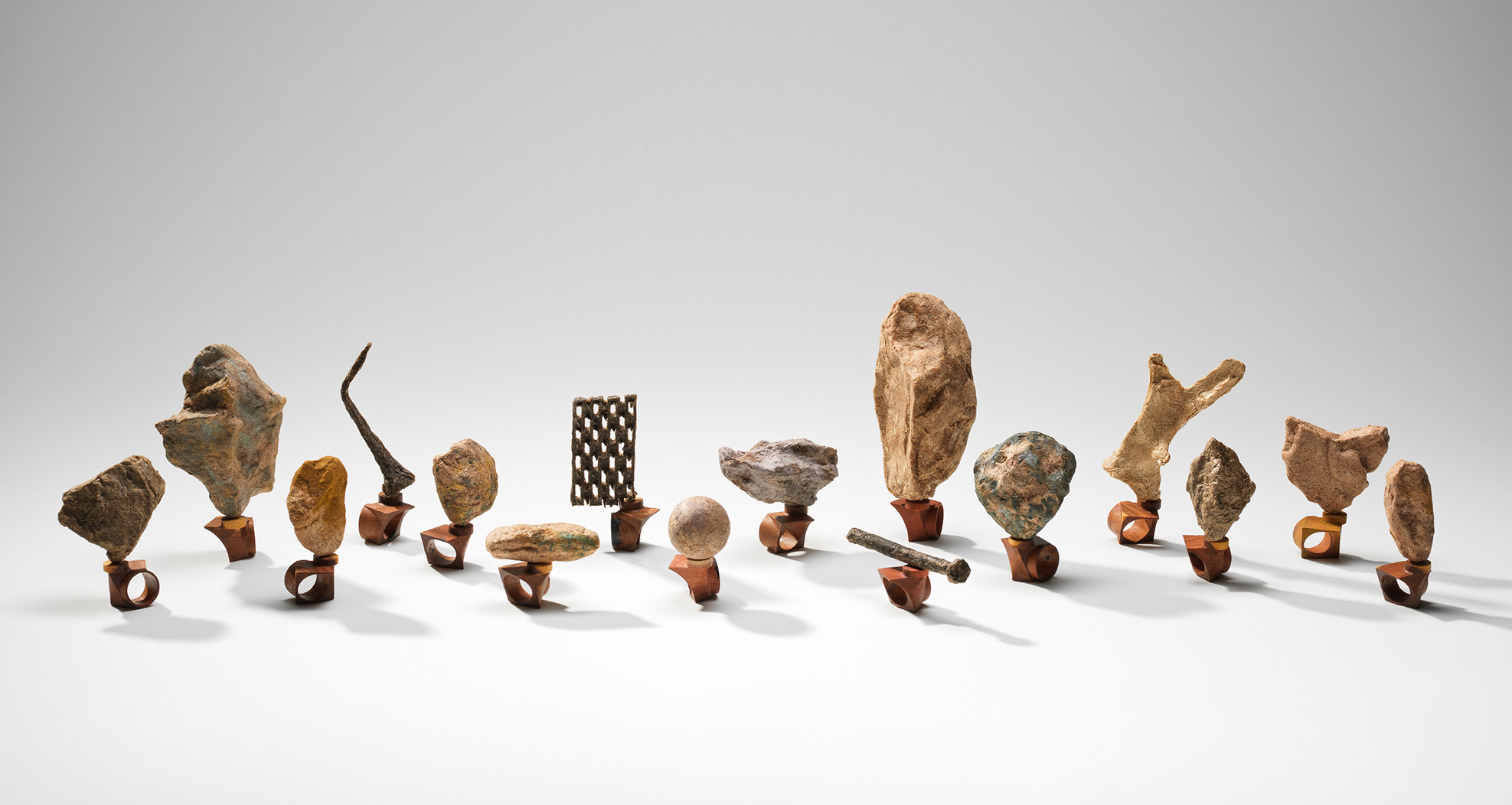
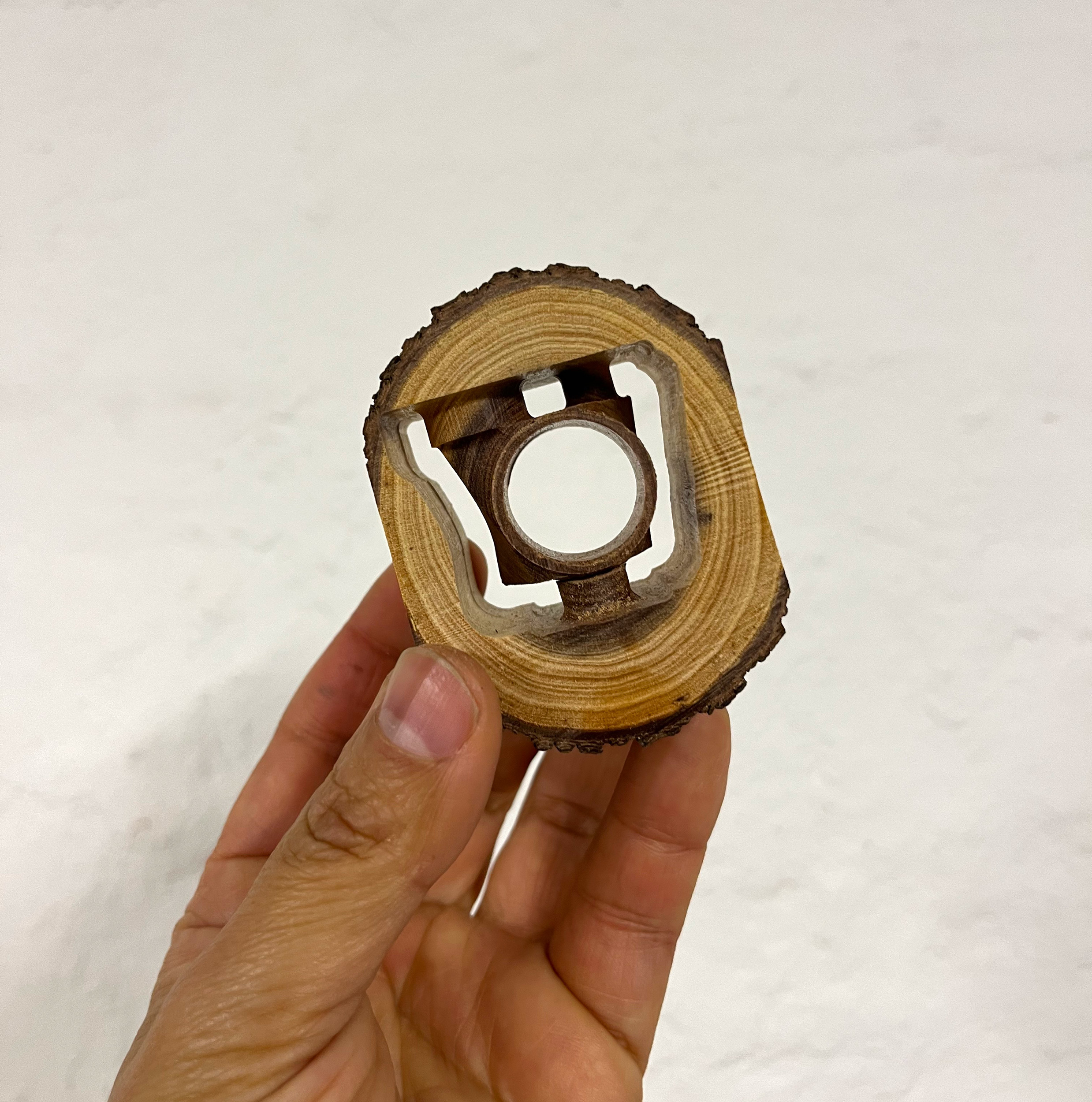
Bioregional rings (Northern Flinders subregion) 2024
Wood and paper from native timbers, yakka resin, ochre, 16 rings, various sizes, largest 15 x 5 x 6 cm
These rings explore distinctions between regenerative and non-renewable materials of production. Native timbers of Acacia and kurrajong were processed into handcrafted paper, for the creation of paper mache shapes simulating rocks and other objects found on Adnyamathanha Country. The rings supporting these paper shapes are digitally milled from the same timbers.
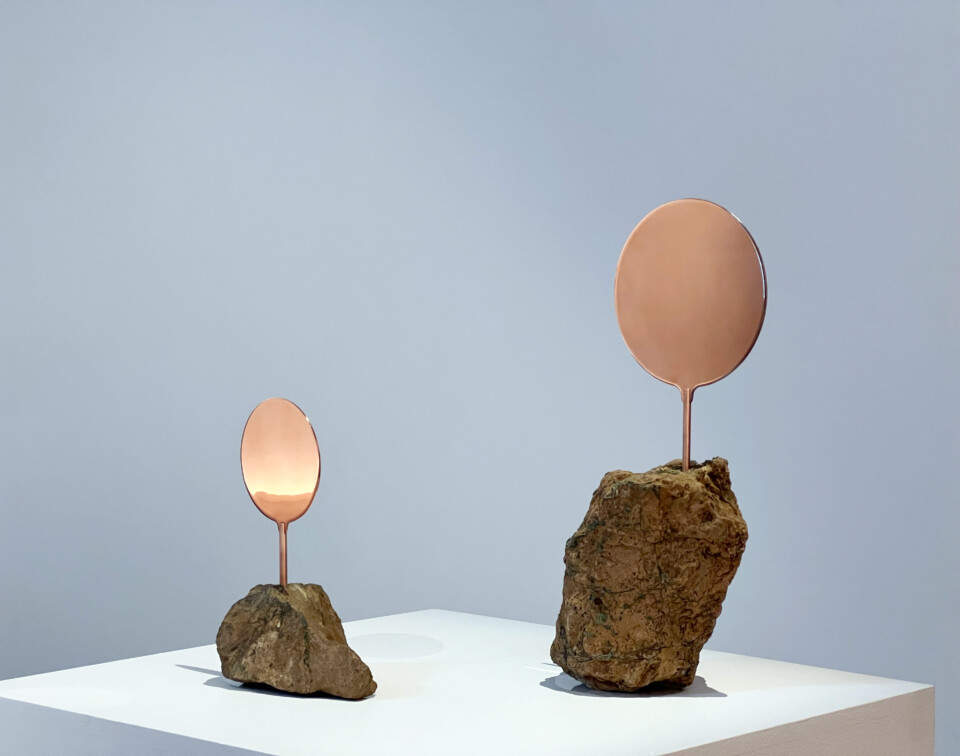
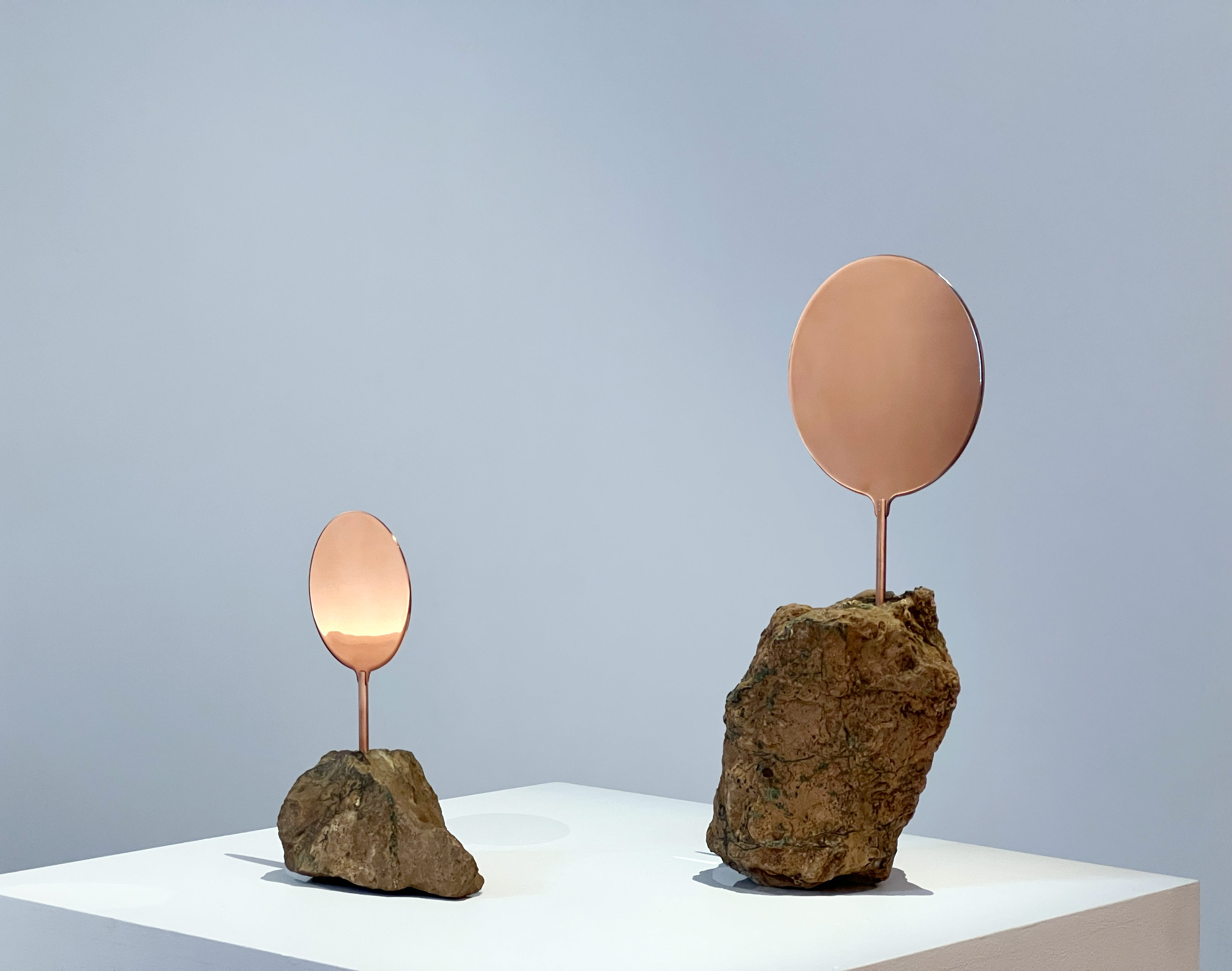
Copper and copper ore mirrors (large and small) 2024
Copper, copper ore, large 51 x 21 x 16 cm, small 30 x 18 x 15 cm
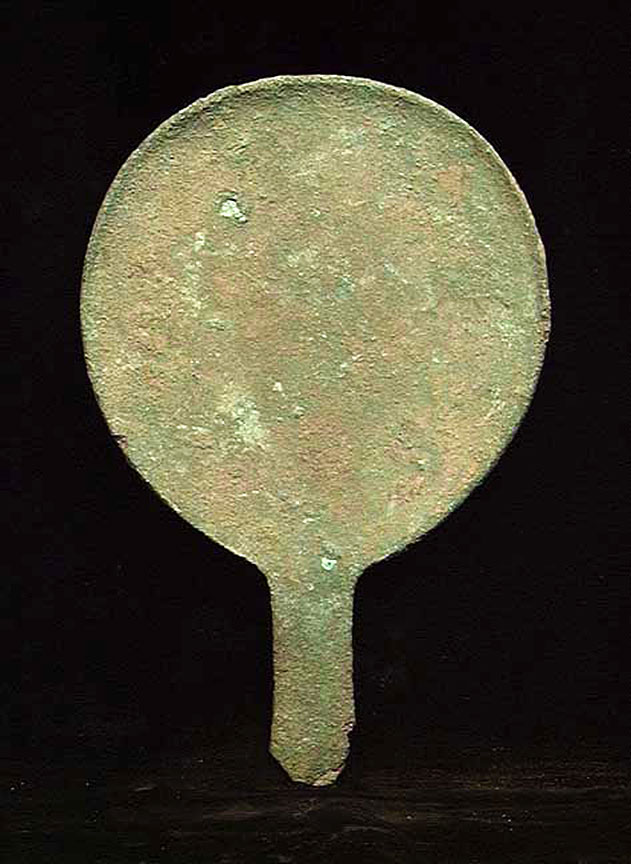
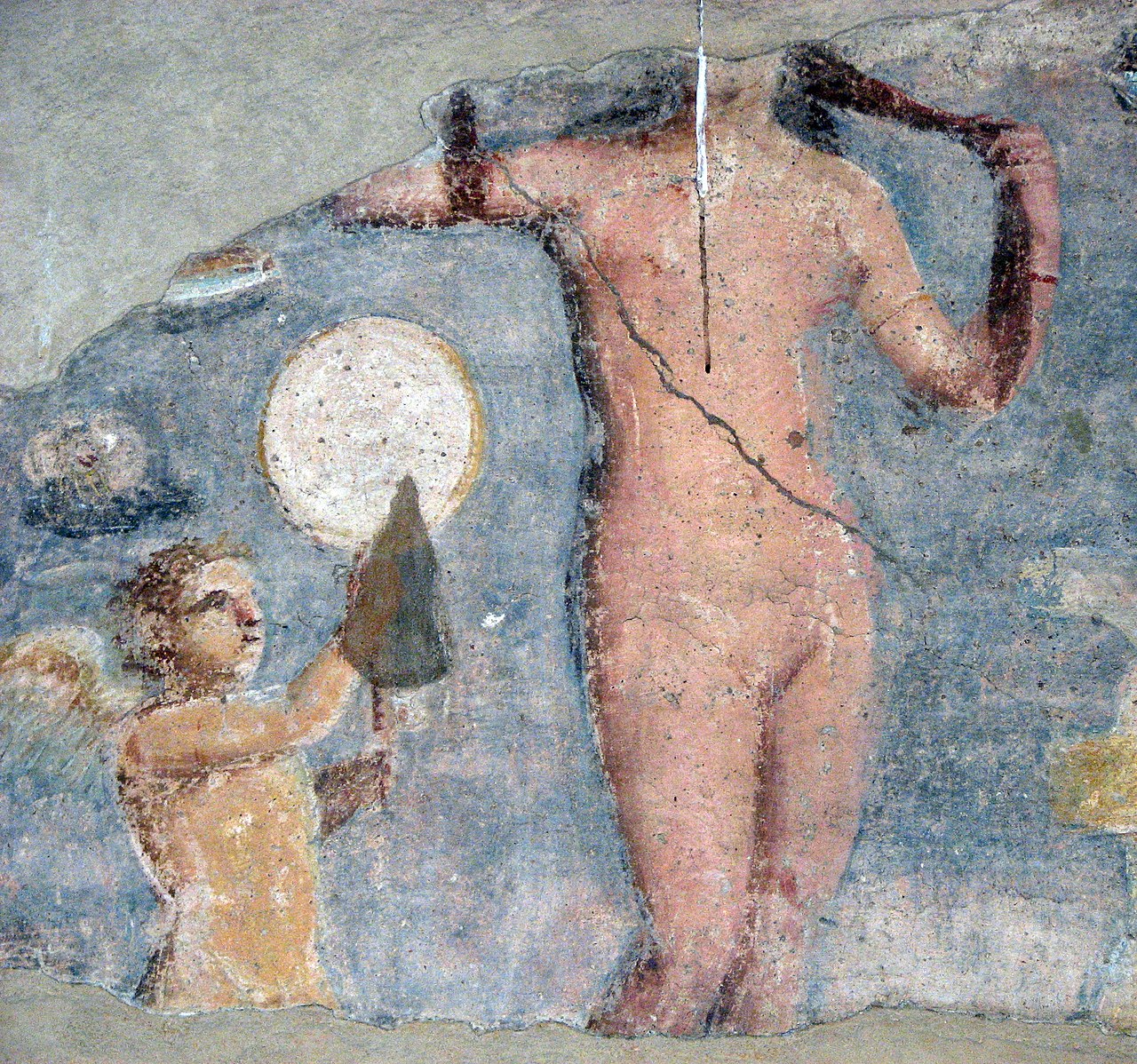
The heritage Blinman copper mine remains as site of colonial territorialisation, juxtaposed to the surrounding materiality of Adnyamathanha Country. The ancient lineage of copper begins in Mesopotamia, a cradle of of Western culture. Mesopotamian copper mirrors were made in round styles that were later developed by the Greeks and Romans into forms symbolic of women. These mirrors explore the tension that arises from geographic displacement of material culture.
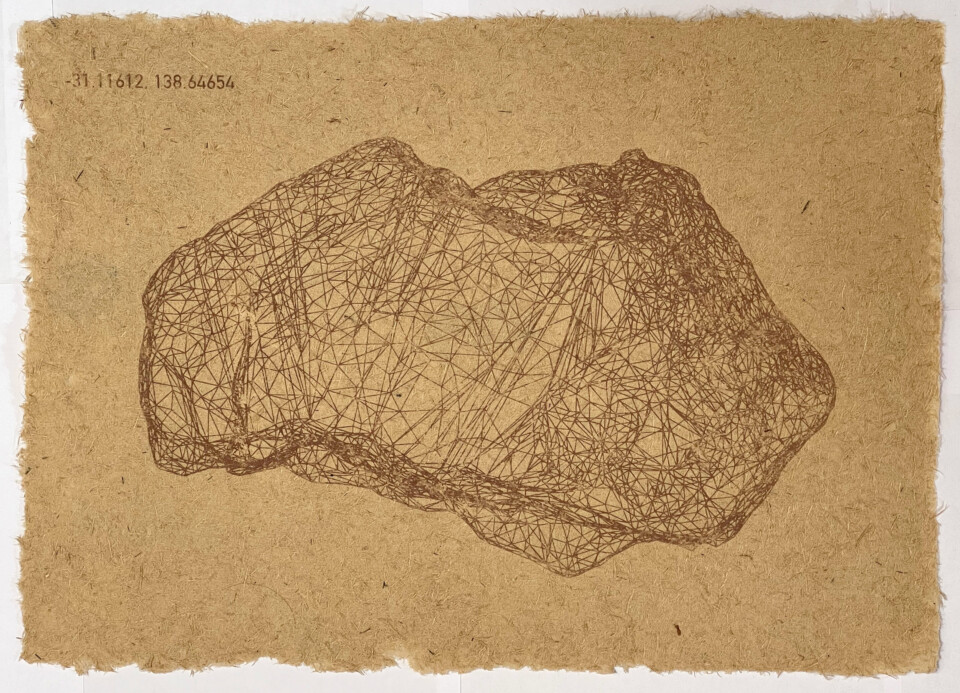
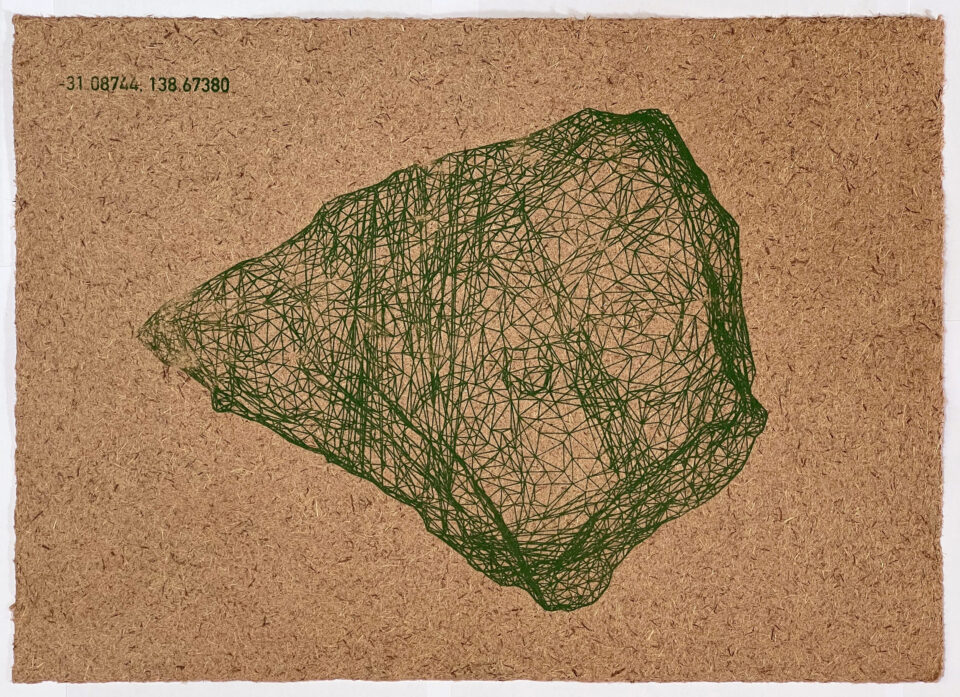
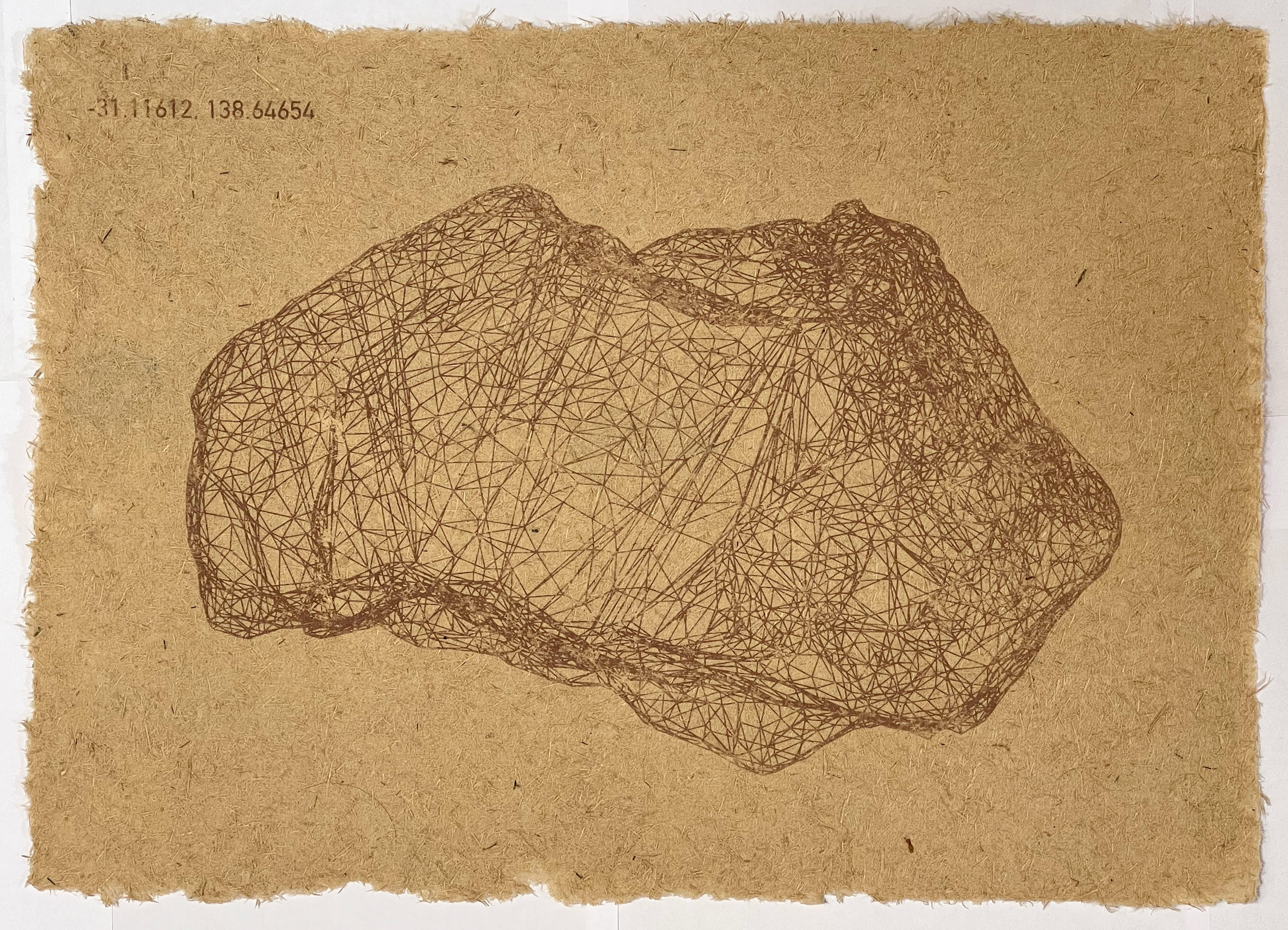
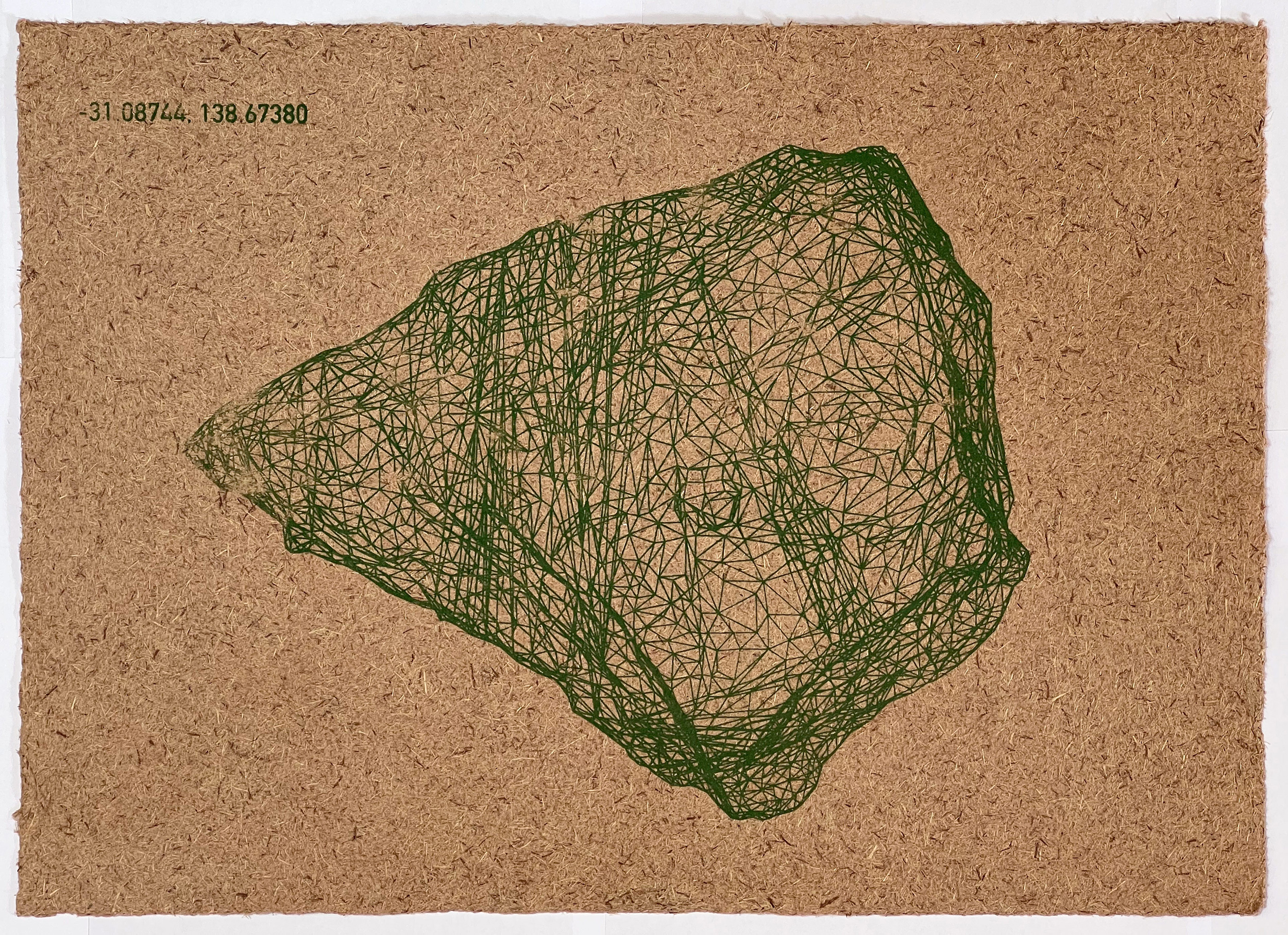
Prints on paper, 2024
Native timbers, ink, 41 x 29 cm
Ochre and Verdigris are used as inks to screen print digital representations of rocks, wood and bone found on Adnyamathanha Country.
MATERIAL NOTES
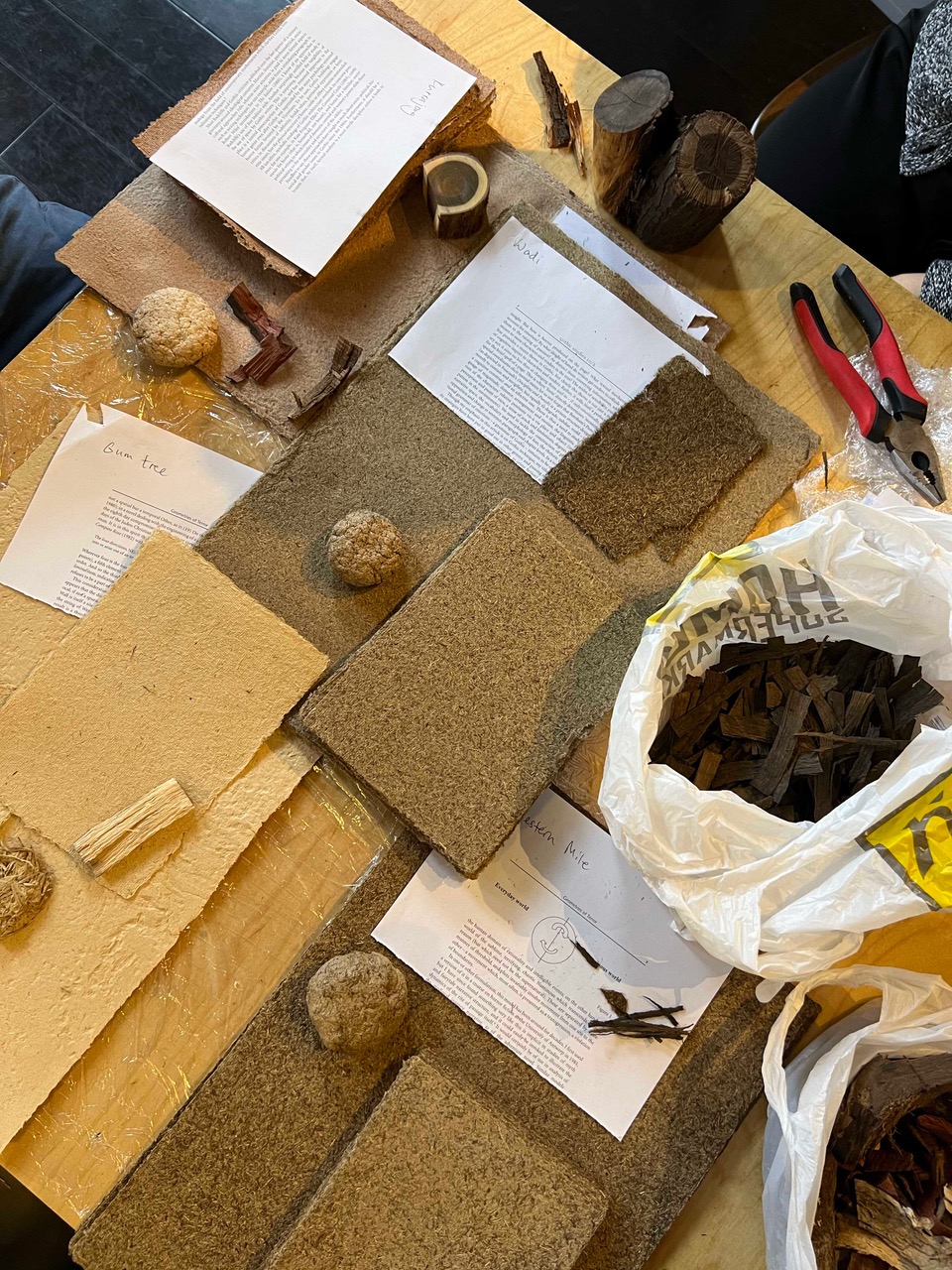
Acacia. Common mulga (Acacia aneura), Western myall (Acacia papyrocarpa) and Wadi (Acacia peuce). Used for paper, paper mache and rings. Given to us by Kristian Coulthard, these hardwoods are native to the Flinders Ranges bioregion and produce dark paper. Their density and structural stability allow fine details via computer controlled digital milling.
Blue gum. Eucalyptus globulus. Used for paper and paper mache. Eucalyptus was used as a control variable in our paper making experiments, as this species has a history of use in paper manufacturing. Blue gum is now planted around the world in monoculture tree farms for paper pulp production. The wood produces a light-coloured paper.
Kurrajong. An unknown Brachychiton species. Used for paper, paper mache and rings. This was given to us by Kristian Coulthard on Adnyamathanha Country but comes from elsewhere, perhaps as far as Queensland. This illustrates bioregional porosity in a contemporary example of the traditional trade routes for wooden objects. The red heartwood and lighter sapwood combine to produce pink-brown coloured paper.
Ochre. Red, white, yellow and purple ochre foraged with Kristian Coulthard. Used as a screen- printing ink, and to colour rings and paper mache rocks. Ochre was the pre-eminent item of trade between the Adnyamathanha and their neighbours and requires respectful handling.
Yakka. The resin of Xanthorrhoea semi-planar, a grass tree. Used to repair milling imperfections in the timber rings, similar to its traditional use by Adnyamathanha to repair spear tips and other crafted objects. Prior to the invention of petrochemical plastics, yakka was widely used by colonial settlers as a glue and casting resin. This nearly led to the extinction of the yakka tree as the settlers harvested the whole, slowly growing tree, rather than use the sustainable Adnyamathanha method of collecting the resin naturally excreted from the tree in summer.
Copper. Used in mirrors and for creating Verdigris. Purchased commercially of unknown origin, but functionally similar to the copper produced at the Blinman Mine between 1862 and 1907.
Copper ore. Malachite. Use as a base to hold the copper mirrors. Foraged from the edges of the Blinman mine with Kristian Coulthard’s permission. Malachite is a common forms of copper ore. These rocks contain low levels of copper.
Verdigris. Copper acetate. Used as a screen-printing ink. Harvested by suspending copper sheet over vinegar. Verdigris was a common source of green ink until the development of petrochemicals.
Below is respectively an ancient Mesopotamian mirror and a Roman depiction of a mirror in use that inspired our mirror design.